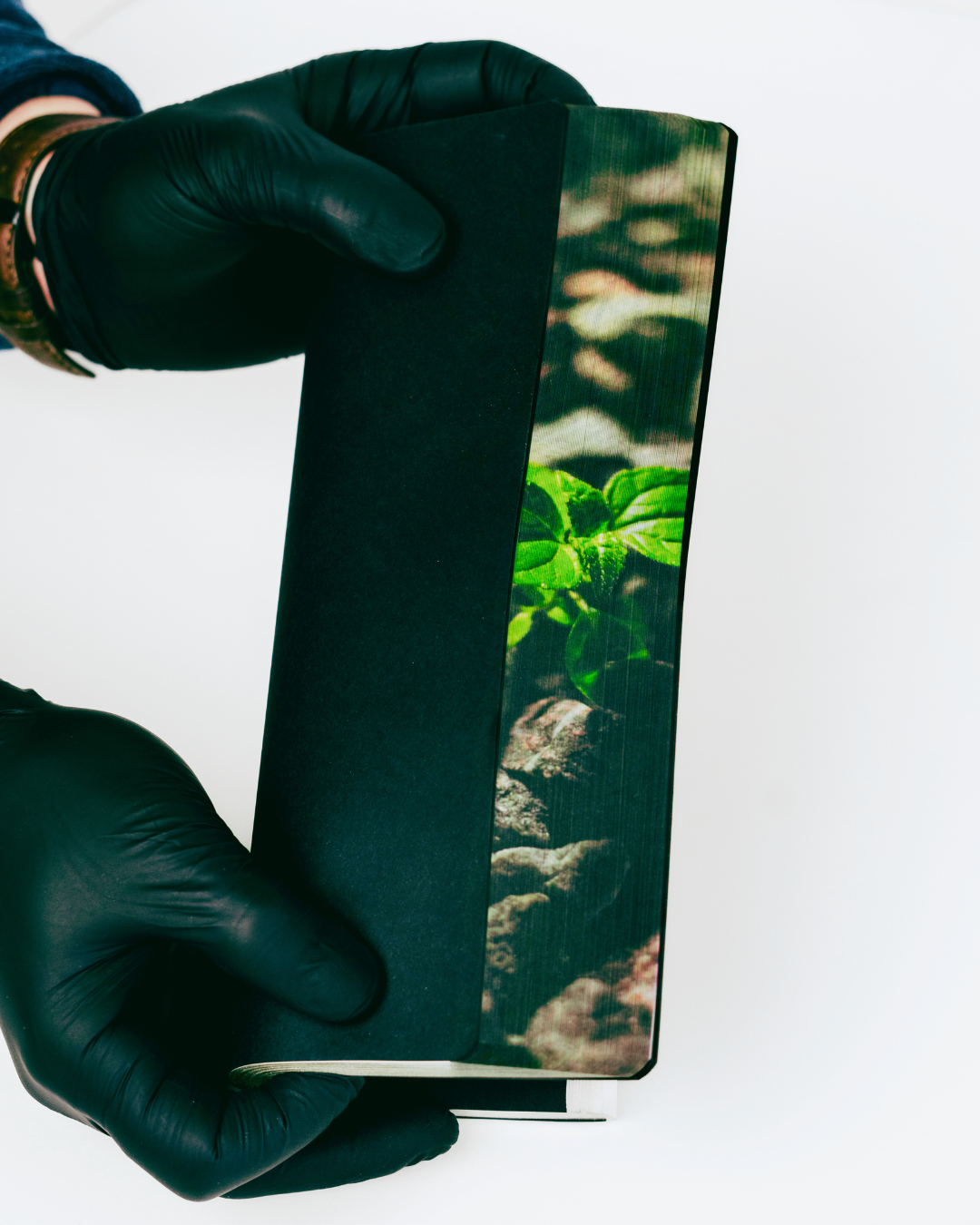
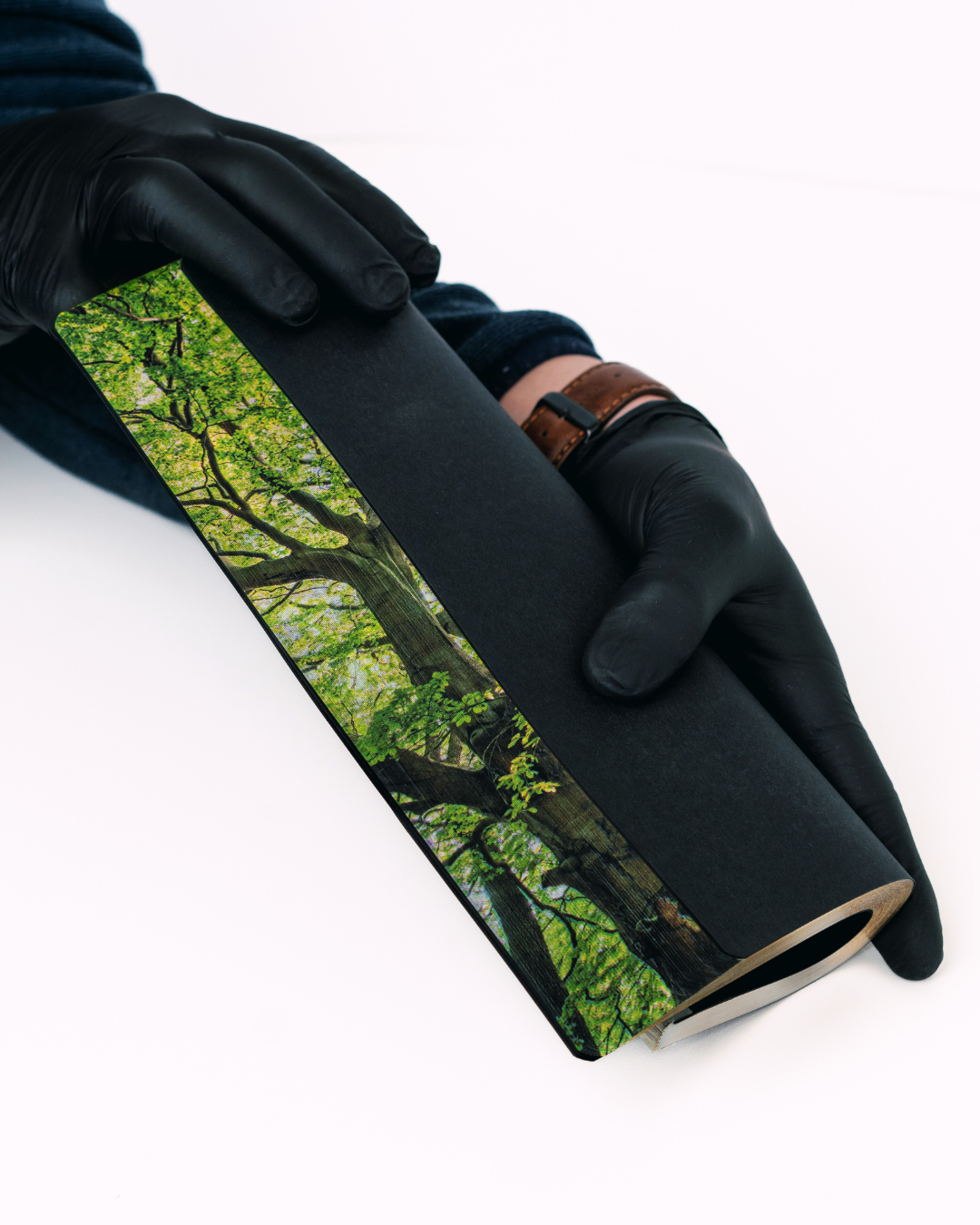
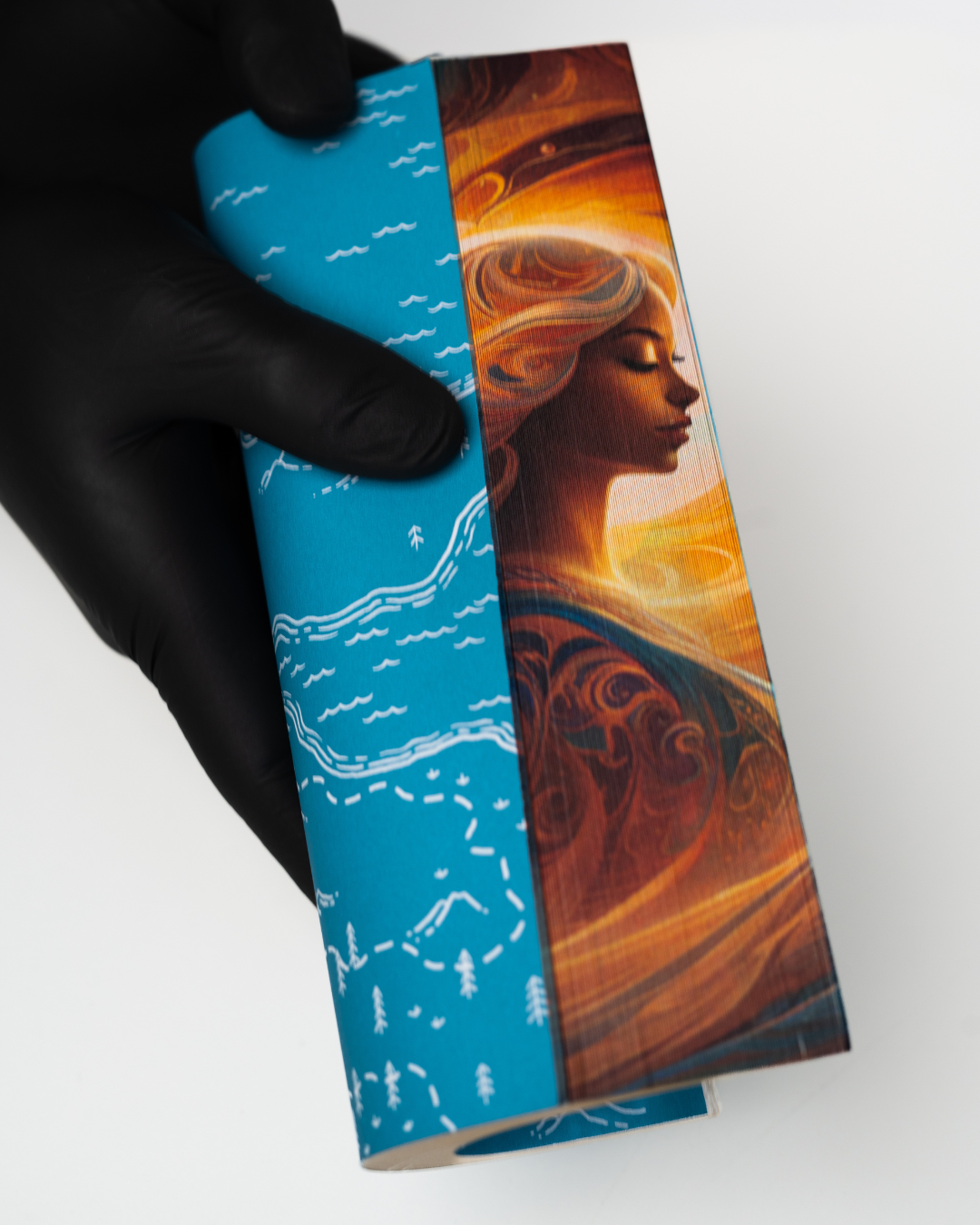
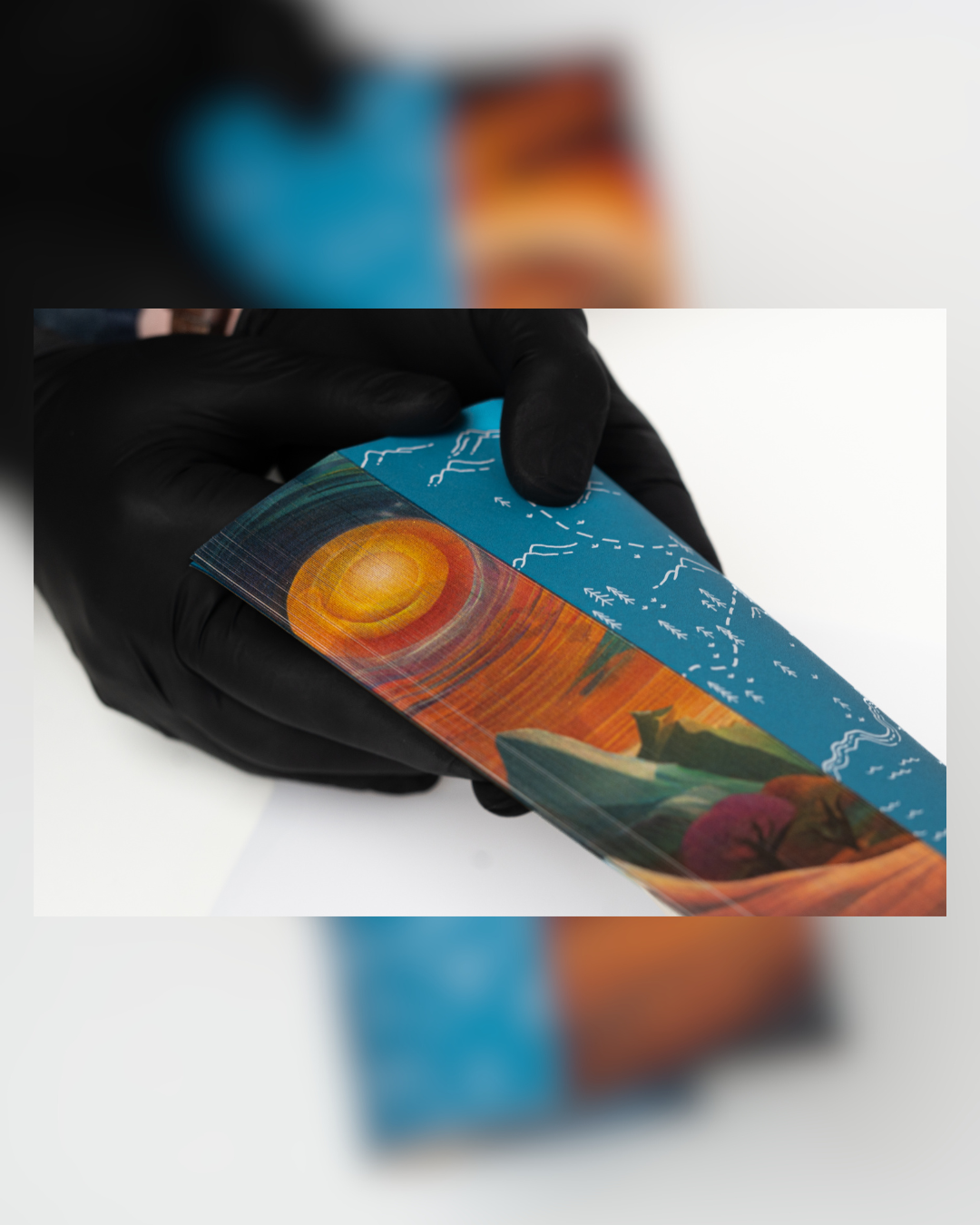
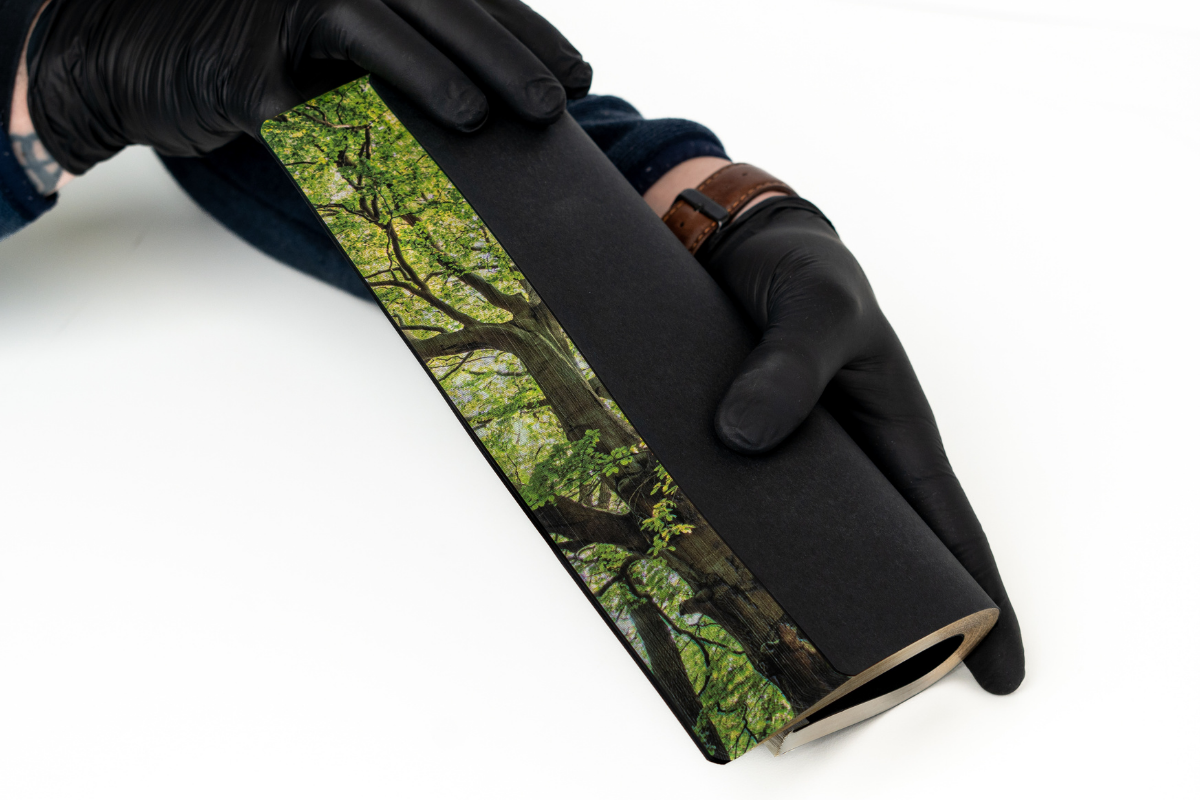
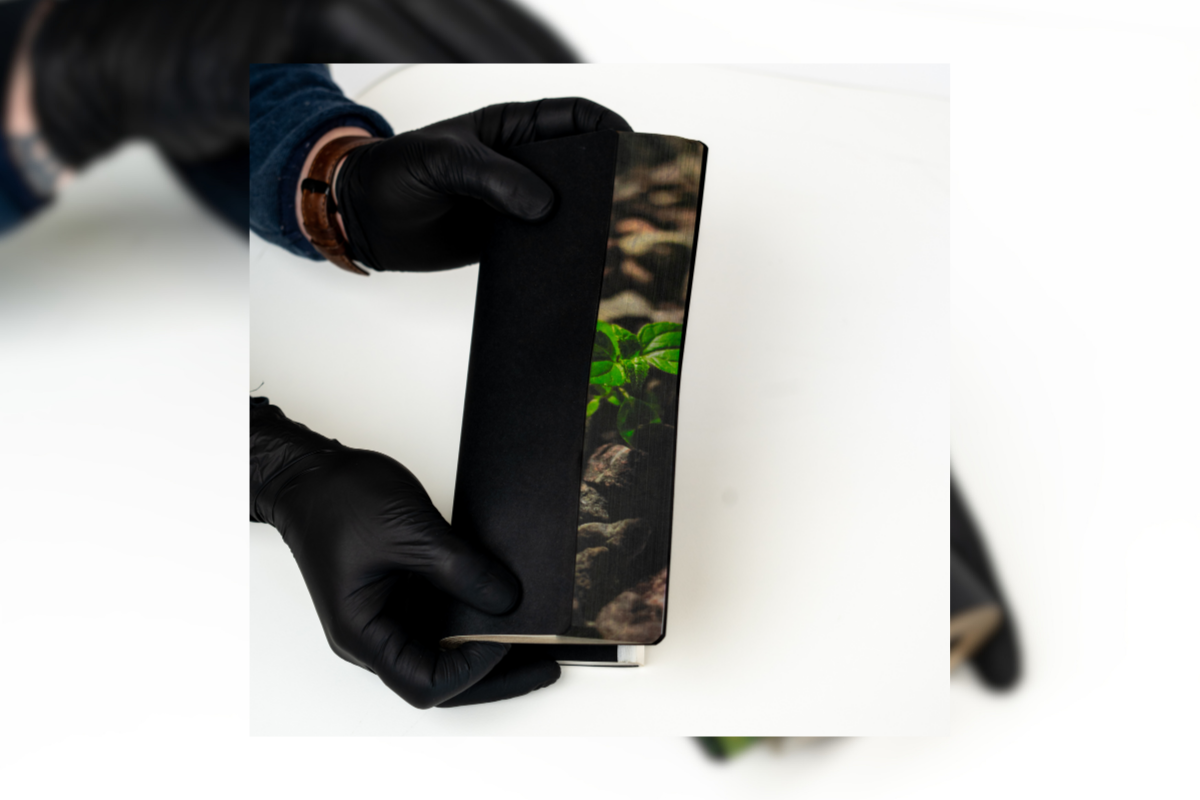
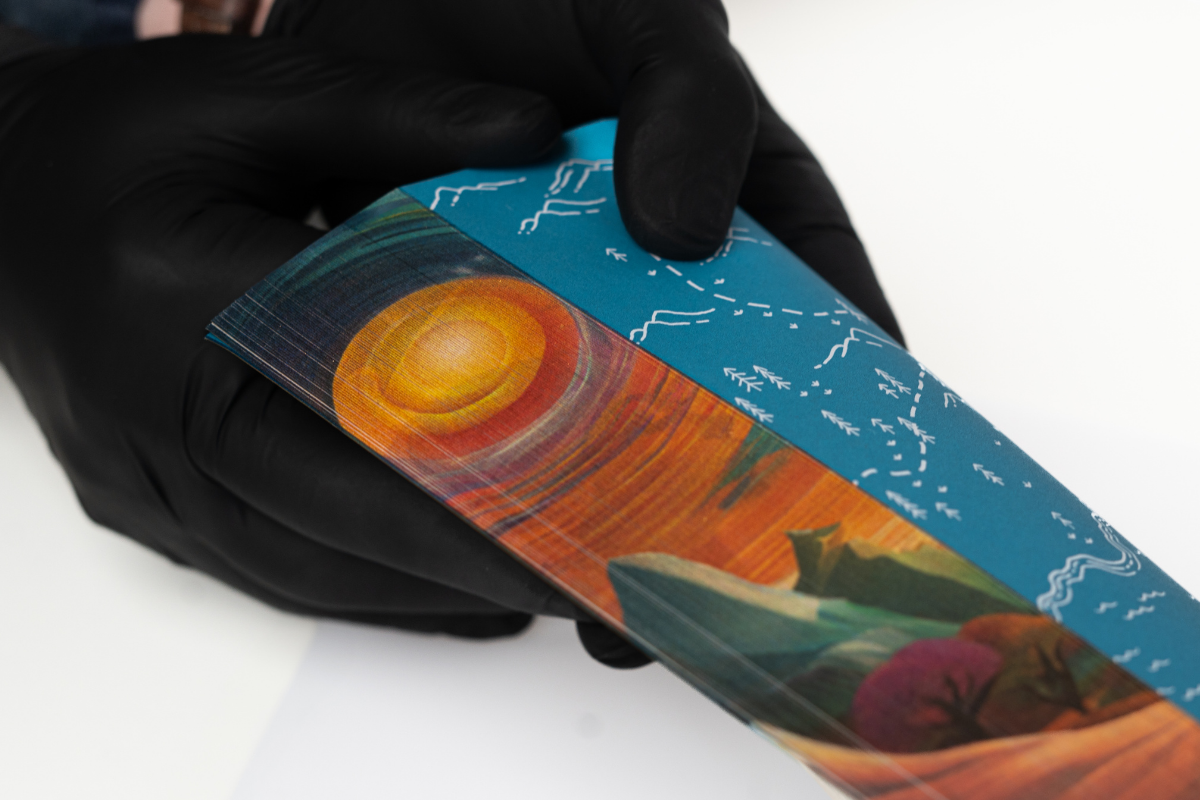
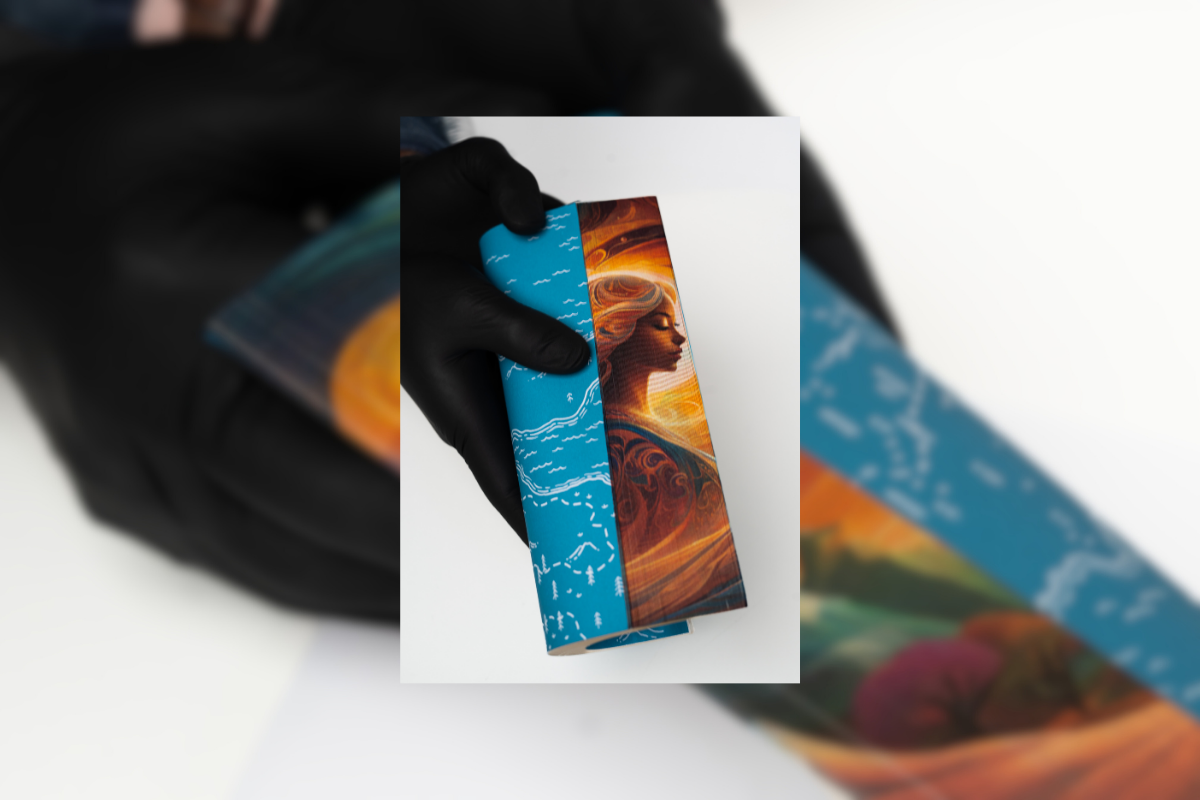
Fore-edge painting has origins dating back to the 15th century, with the first documented examples in England. This technique developed mainly during the Renaissance, a period characterised by considerable advancement in the art of bookbinding and book decoration. Over time, fore-edge painting became a hallmark of rare and luxury books, appreciated for its aesthetics and the element of surprise that emerges when the book is leafed through. Today, Doliberg has innovated this tradition while maintaining the final effect, and patented a semi-automatic process known as ‘GHOST’. This process involves applying a foil to the edges of the pages, while on the front of the book designs are made that only become visible when the pages are flipped through. The designs can appear or disappear depending on the viewing angle, creating a surprising effect. This workmanship is particularly appreciated by collectors and book lovers because of its beauty and high artistic value.